The Spirit of Mt. Lefroy: Contemporary Rendition of a Lawren Harris Landscape
August, 2025
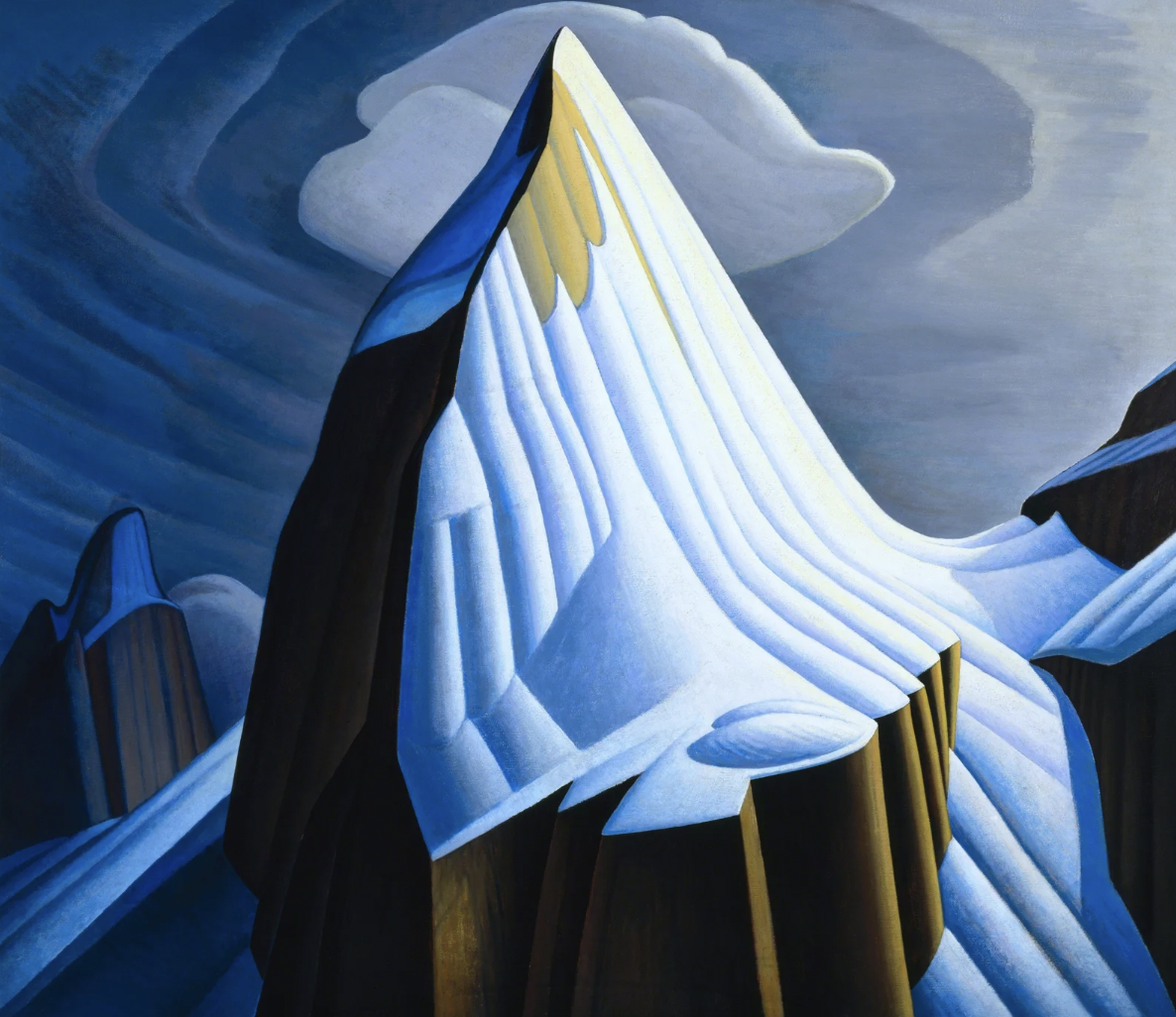
Lawren Harris, Mt. Lefroy, Oil on Canvas, 1930.
The artistic trajectory of Canadian painter Lawren Harris (1885-1970) not only follows his spiritual journey, but is itself an expression of it.
In his early career works, he frequently painted street scenes and homes in Toronto as he was familiarizing himself with colour, form, and his direct environment. In his Group of Seven years (1920-1933), his most well-known, he painted primarily recognizable landscapes of areas like the North Shore of Lake Superior and Algonquin Park. At this time, he was becoming very interested in the teachings of Theosophy, which, pulling from the great world traditions, explores the One Truth which weaves through all of them.
As you can probably imagine, the source material on such a topic is immense. Within that, Harris had a particular affinity toward Hindu spirituality, under the umbrella of Theosophy, and was known to have read a commentary on the Bhagavad Gītā daily — a conversation where Krishna (the Higher Self) teaches integrated and lived Yogic practice to Arjuna (the individual self). There is of course a lot more to it, but that’s for another time.
As he was increasingly contemplating its teachings on the one great Spirit which permeates all of existence toward the end of his Group of Seven years, Harris began painting not only the beauty of land itself, but the spirit of the land. As a result, his style became slightly more abstracted, as if moving from the density and differentiation of the material toward the subtlety and unity of its true substance.
He was, in a sense, slowly removing the garment of recognizable form to reveal the undifferentiated perfection of Beauty which shines forth from the centre. It was during this period, in 1930, that he painted Mt. Lefroy.
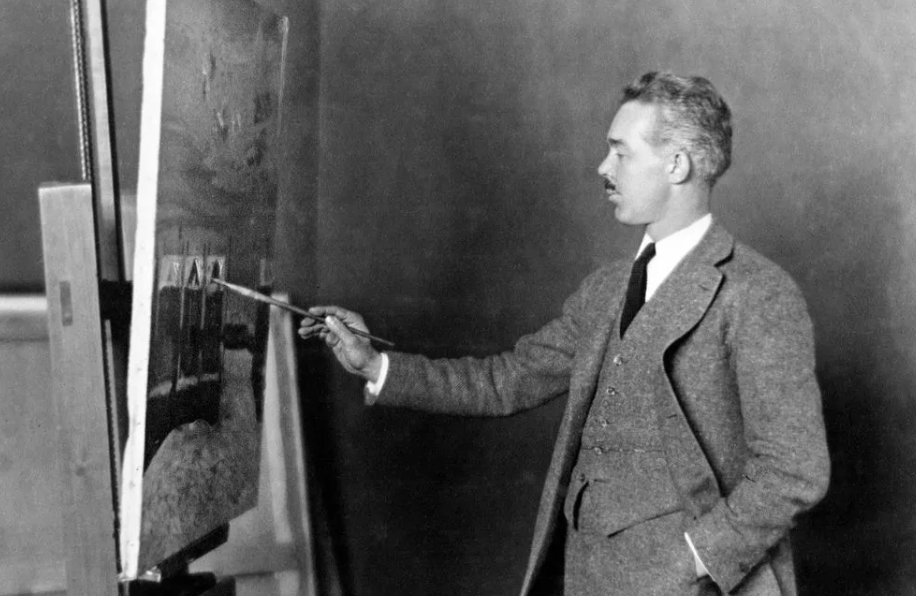
Lawren Harris in his Toronto studio.
In the Bhagavad Gītā, Krishna teaches Arjuna of this all-permeating Spirit (Self) which is the heart of each person, place, and everything within creation. He says:
“Know this, that that by which all this universe is created is indestructible […] As one abandons worn-out clothes and acquires new ones, so when the body is worn out a new one is acquired by the Self, who lives within.
The Self cannot be pierced by weapons or burned by fire; water cannot wet it, nor can the wind dry it. It is everlasting and infinite, standing on the motionless foundations of eternity.”
Harris, who was deeply engaged in this study, and using his painting practice as an exploration and evocation of deeper spiritual truths progressed even further into full abstraction for the last 25-30 years of his life. In 1945, he wrote to himself in a journal:
“Visible nature is but a distorted reflection of a perfect world and the creative individual viewing her is inspired to perceive within and behind her many garments that which is timeless and entirely beautiful.”
This correlation between the teachings of the Gītā and the abstract work of Lawren Harris was the subject of my two-year masters research, but it did not stop at the writing on paper. I felt so inspired by the work that I have been exploring it further in my own painting practice, and most directly in the 2025 painting The Spirit of Mt. Lefroy. This work takes Harris’ mid-career, slightly abstracted landscape, and literally peels it open to reveal a candle at the heart. The candle is a symbol for the light of the Divine — the one Spirit which permeates all of existence, radiating from the heart of all the forms we love. It is what Harris was working with, but in a more direct and simultaneously symbolic way. The above passages are two of my favourites, from Krishna and from Harris. And it is here that they meet on canvas through my 2025 lens.
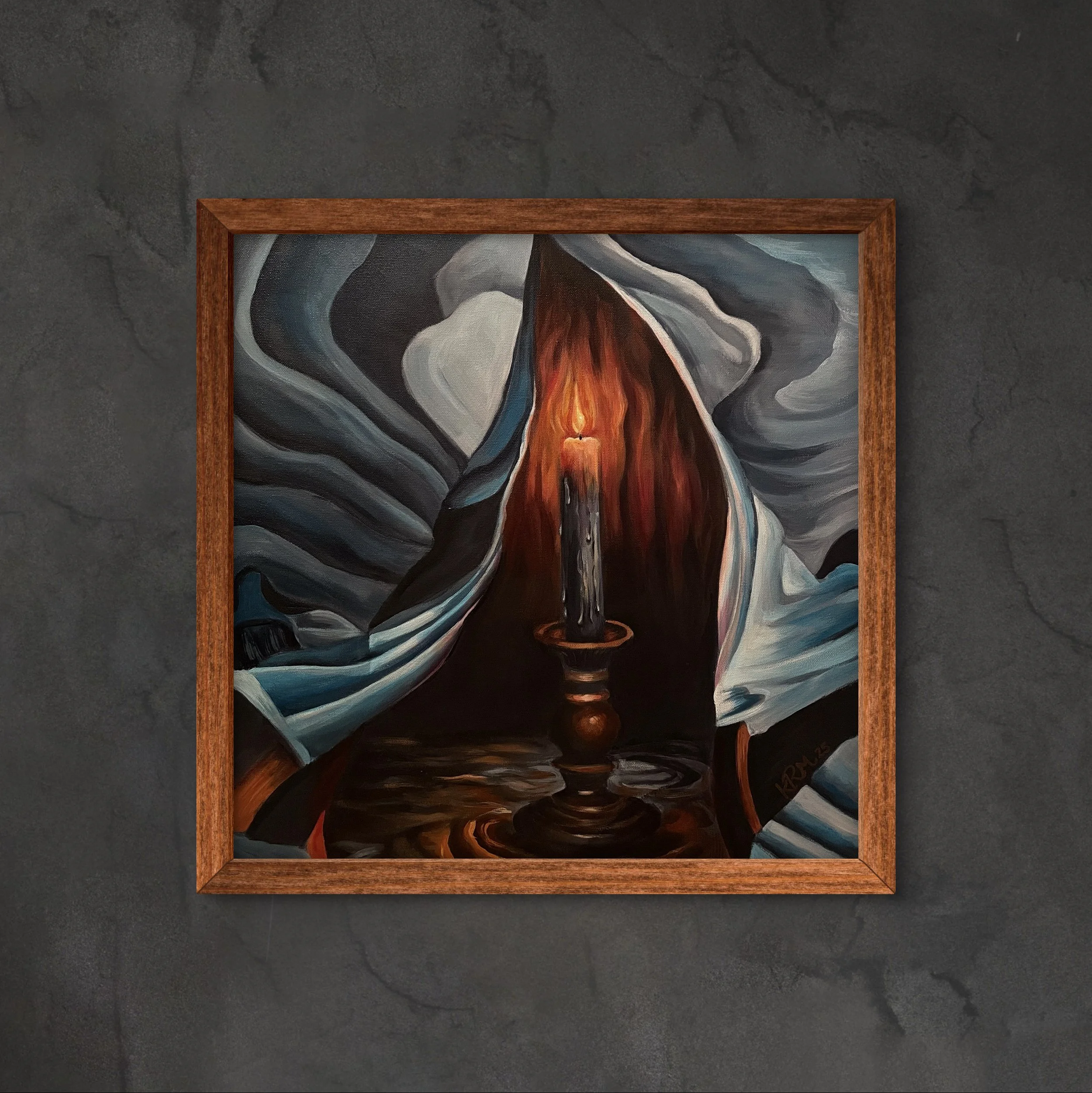
Kayla Radhika Miller, The Spirit of Mt. Lefroy, 20×20”, Acrylic on Camvas, 2025.
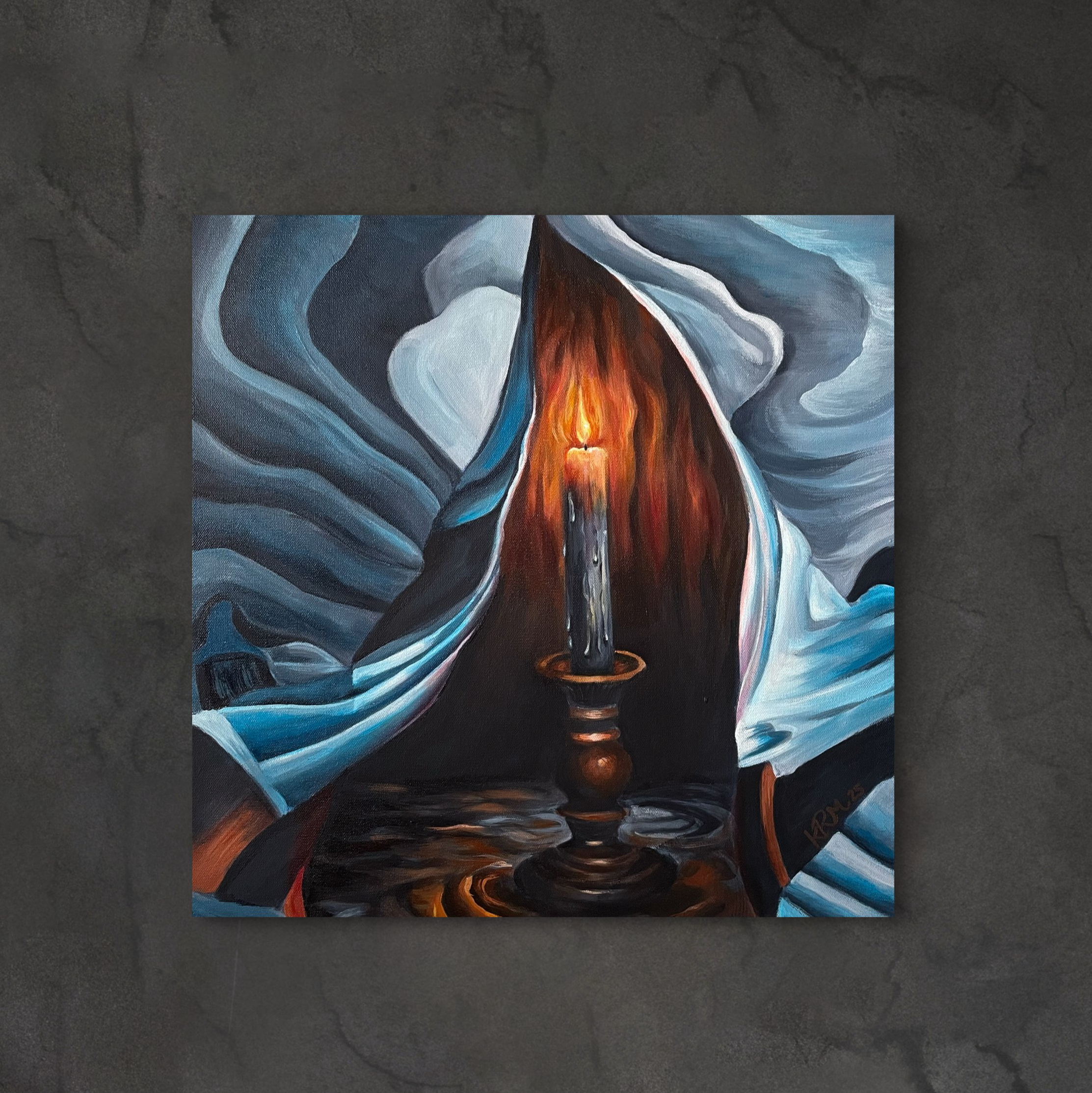
The Spirit of Mt. Lefroy
20×20×1.5”
Acrylic on Canvas
2025
This piece explores the unchanging divinity at the heart of all forms. Inspired by my masters research on Lawren Harris and the Bhagavad Gita, this painting is an amalgamation of Harris’ 1930 painting Mt. Lefroy, his reflections on the spiritual beauty behind the garments of nature, and Krishna’s guidance to Arjuna in the Bhagavad Gita that the real Self is beyond all temporality.
This piece offers not just a landscape, but a contemplative mirror of the Self beyond change and the God that dwells behind shifting surface appearance.
Product Details:
This original painting is unframed, with the edges painted for a finished look. It comes ready to hang as is, or you may choose to frame it to suit your space.
Each piece is packaged by hand, with care, to ensure it arrives safely.
Please allow 5–7 business days for packaging and preparation before shipping. Thank you for your patience and for supporting my work.
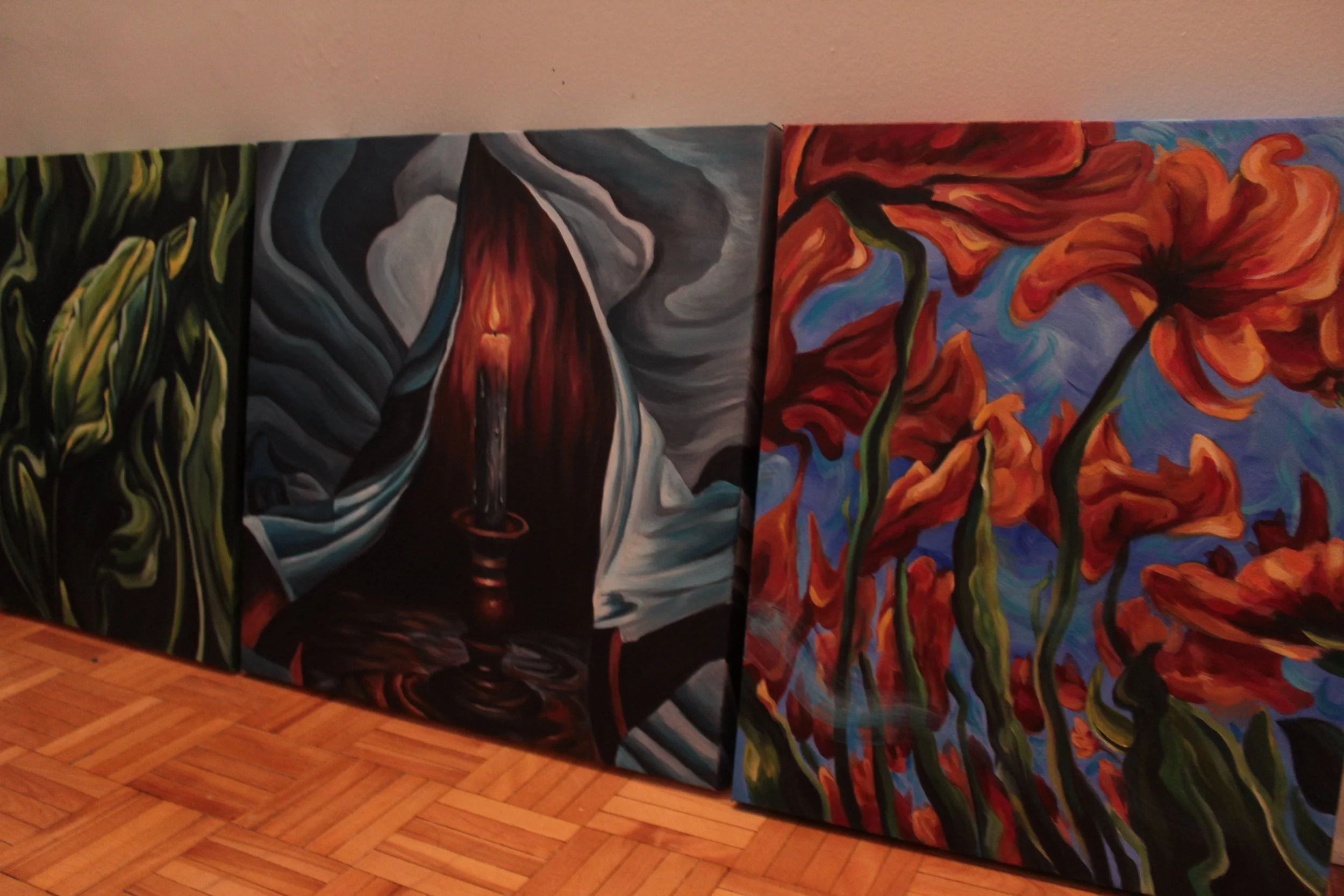
Overture, The Spirit of Mt. Lefroy, and Allegro, 2025.
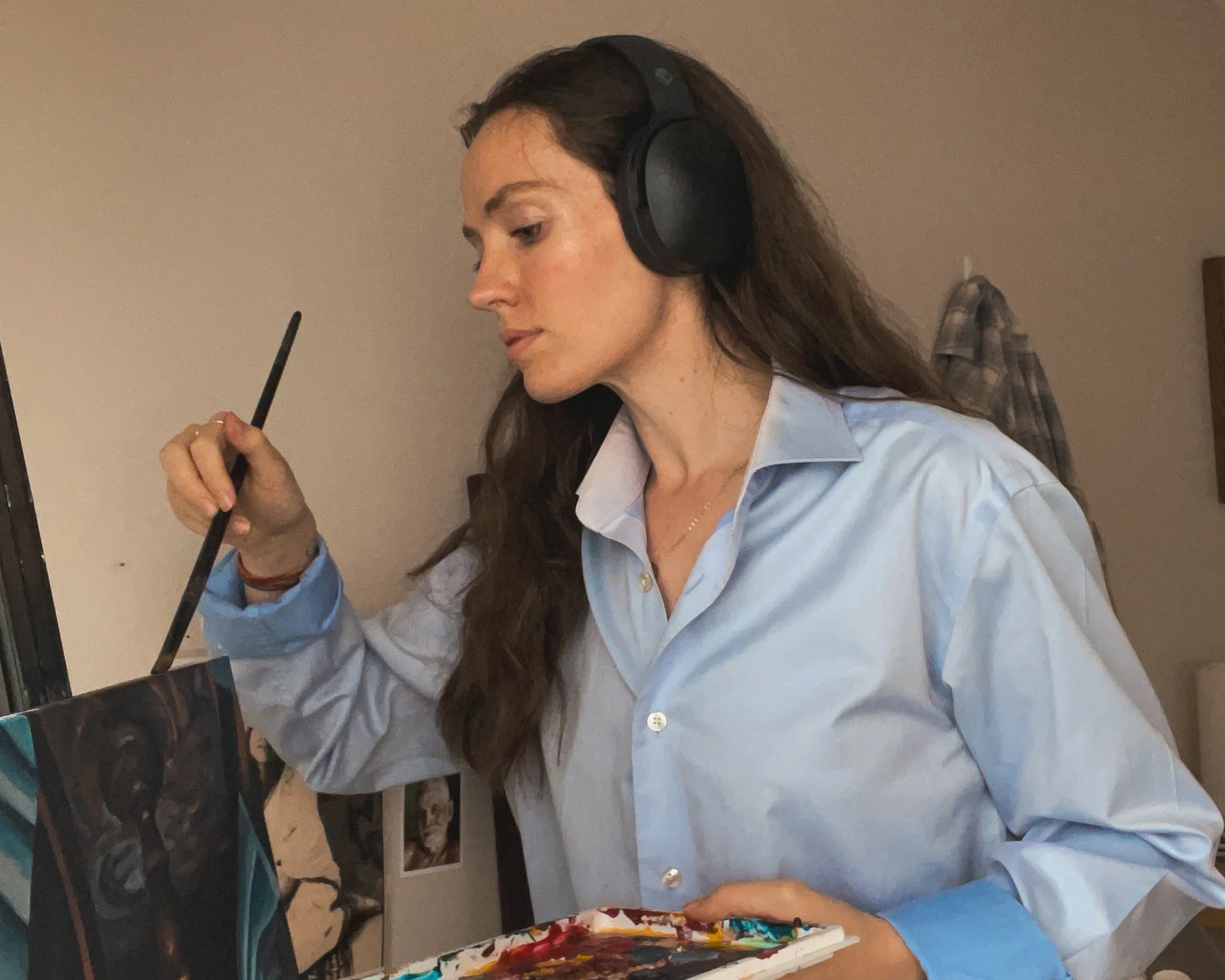
Painting in my Ottawa studio, 2025.
